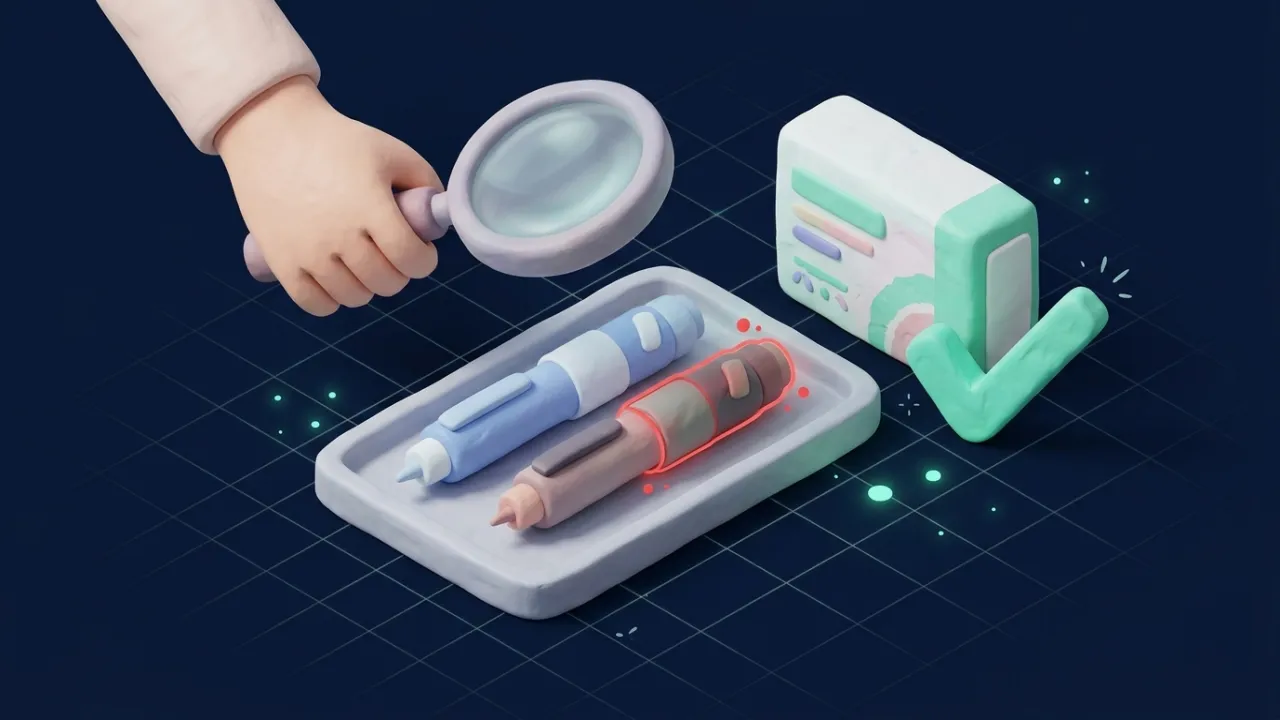
A post promises the same weight-loss pen your friend uses, half price, no doctor's visit needed, delivered in two days. With demand for semaglutide (Ozempic, Wegovy) and tirzepatide (Mounjaro, Zepbound) far ahead of supply in many places, counterfeiters have moved in fast. This guide is not medical advice; it is about making sure what you inject is real.
Get weight-loss injections only with a prescription from a licensed pharmacy. Avoid social media sellers, "no prescription" websites and "research use only" products. Before using a pen, compare the carton, label, batch number and needles with official product information, and if anything looks different, ask a pharmacist first.
What regulators have found
The U.S. FDA has warned about counterfeit Ozempic found in the legitimate U.S. drug supply chain, and about unapproved semaglutide products sold online. The World Health Organization issued a global alert on falsified semaglutide in early 2024 after fake products were detected in several regions. In the UK, the MHRA has seized fake weight-loss pens and warned that some contained other substances, such as insulin, that can cause dangerous drops in blood sugar.
Counterfeit, compounded or unapproved: what's the difference?
| Type | What it is | Risk |
|---|---|---|
| Brand product from a licensed pharmacy | Approved medicine, tracked supply chain | Normal side effects; follow your doctor's advice |
| Compounded semaglutide or tirzepatide (U.S.) | Made by a licensed compounding pharmacy; not FDA-approved | Quality and dosing can vary; FDA has received reports of dosing errors |
| "Research use only" peptides | Chemicals not made for human use | Unknown purity and contents |
| Counterfeit pen | A fake copied to look like a brand product | May contain nothing, the wrong drug or contaminants |
Warning signs of a fake pen or seller
- No prescription required, or a "quick online questionnaire" with no real clinician.
- Sold through social media, messaging apps or marketplace listings.
- Prices far below pharmacies, or bulk discounts.
- Labels with spelling mistakes, a different language than expected, or missing batch and expiry details.
- Cartons that look different from previous ones, or needles not supplied as described in the official leaflet.
- Products described as powder to mix yourself, unless prescribed that way by a licensed pharmacy.
How to check what you have
- Check the code. On U.S. cartons, enter the NDC into our medicine checker to confirm it matches the product and manufacturer. A match is not proof the pen is genuine, but a mismatch is a red flag.
- Compare with official information. Use the manufacturer's patient leaflet and your previous supply to compare pen color, label and dose markings.
- Check the seller. Paste the website into our website checker and read how to tell a real online pharmacy.
- Check for recalls on our medicine recalls page.
- Ask your pharmacist if anything differs. They can verify packs and report suspected fakes.
If you used a pen you think is fake
Stop using it and keep the pen, carton and receipt. If you feel shaky, sweaty, confused or unwell, seek medical help immediately, because some fakes have contained insulin. Tell your doctor or pharmacist, and report the product to your national regulator (FDA MedWatch in the U.S., the MHRA Yellow Card scheme in the UK, NAFDAC in Nigeria). For more general checks, see our guide to spotting fake medicine.
If a weight-loss pen needs no prescription, it may not need to be real.
Frequently asked questions
How can I tell if my Ozempic pen is fake?
Compare the pen, label, carton and needles with the official product information, check the batch number and expiry, and buy only from a licensed pharmacy with a prescription. Regulators have reported fakes with wrong labels, wrong needles and unknown contents. If anything differs, ask a pharmacist before using it.
Is compounded semaglutide the same as counterfeit?
No. Compounded drugs are made by licensed pharmacies under specific rules, but they are not FDA-approved and quality can vary. Counterfeits are fakes made to look like brand products. The FDA has warned about both unapproved and counterfeit products.
Can I buy weight-loss injections without a prescription?
Not legally in most countries. Sellers offering semaglutide or tirzepatide without a prescription, especially through social media or messaging apps, are a major source of fakes.
Are "research use only" peptides safe to inject?
No. Products labeled for research only are not made or tested for human use, and regulators have warned against buying them.
What are the dangers of counterfeit injections?
They may contain no active drug, the wrong dose, insulin or other substances, or be contaminated. Regulators have linked some fake pens to serious adverse events, including dangerously low blood sugar.
What should I do if I used a pen I think is fake?
Stop using it, keep the pen and packaging, and contact your doctor or pharmacist, or emergency services if you feel unwell. Report it to your national medicines regulator, such as FDA MedWatch in the U.S.
How do I check an online pharmacy?
Make sure it requires a prescription, shows a physical address and is licensed in your country. Our guide to buying medicine online explains how to verify one.
Can I check the NDC on my pen?
Yes. Enter the NDC from the U.S. carton into our medicine checker to confirm the listing. A match does not prove the pen is genuine, because counterfeiters copy real codes, but a mismatch is a clear warning.
Sources
- FDA: Drug safety alerts on counterfeit semaglutide (Ozempic)
- FDA: Medications containing semaglutide marketed for weight loss
- WHO: Medical Product Alert on falsified semaglutide
- UK MHRA: Warnings on fake weight-loss pens
- FDA MedWatch: Report a problem
Figures are the latest available from each source at the time of writing. We review guides when official data or rules change. Spotted an error? Tell us.