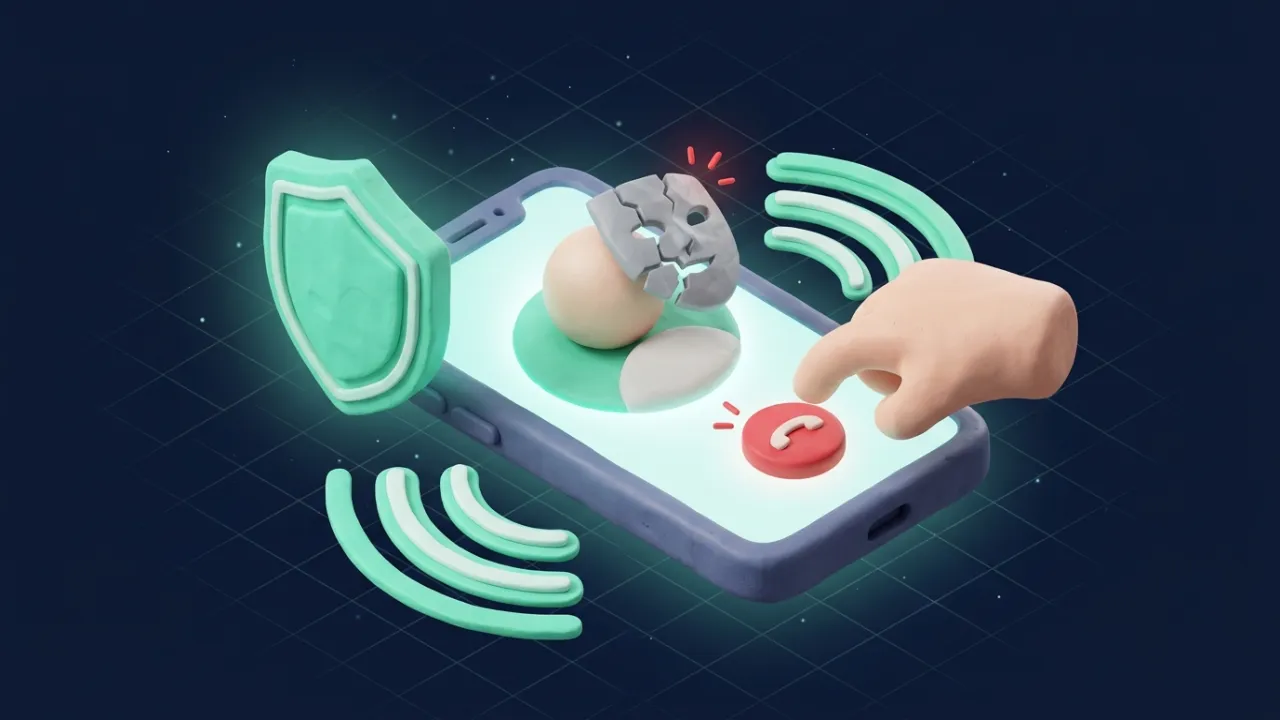
"This is the fraud department. We have stopped a suspicious payment on your card." The number on your screen matches your bank, the voice is calm and professional, and they already know your name. Most people would keep listening. That is exactly why it works.
Treat any unexpected call that asks for money, codes, card details or remote access as a scam, whatever number it shows. Caller ID can be faked. Hang up, then call the organization on a number you find yourself, such as the one on your card or its official website.
Why the number on your screen means little
Caller ID spoofing lets criminals display any number they like. The FCC explains that spoofing is illegal when used to defraud, but it remains common because calls are routed across many networks. A matching number is not proof. Neither is a caller who knows your name, address or the last digits of your card; that information is widely leaked.
The scam calls you are most likely to get
| The call | What they want |
|---|---|
| "Your bank's fraud team" | One-time codes, card details, or a transfer to a "safe account" |
| Government agency (tax, social security, immigration, police) | Payment by gift card, crypto or wire to avoid "arrest" |
| Tech support or "your computer is infected" | Remote access to your computer and your bank login |
| A relative in trouble, sometimes with an AI-cloned voice | Urgent money for bail, a hospital or a lawyer |
| Prize, refund or delivery problem | A small "fee" and your card number |
| One ring from an international number | A costly call back |
Lines that should end the call
- "Read me the code we just texted you."
- "Move your money to a safe account to protect it."
- "Pay with gift cards, crypto or a wire transfer."
- "Don't tell anyone, and don't hang up."
- "Download this app so I can fix it."
- "There is a warrant for your arrest unless you pay today."
Voice cloning and the family emergency call
The FTC has warned that scammers use AI to imitate a loved one's voice from short clips posted online. The call is panicked and short: an accident, an arrest, a request for money right now. Agree a code word with your family that only you know. If you get a call like this, hang up and call your relative back on the number you already have.
Check a number
Enter the number in our phone number lookup to see its country, whether it is billed as international, and reports from other people. A clean result does not make a call safe, because scammers rotate numbers constantly, but a reported number confirms your suspicion.
Block and reduce scam calls
- Turn on call filtering. iPhone and Android both offer settings to silence unknown callers or screen suspected spam.
- Use your carrier's free tools. Most major carriers offer free spam blocking apps or settings.
- Register with Do Not Call. It cuts legal telemarketing, which makes the remaining unknown calls easier to ignore.
- Let voicemail screen. Real callers leave messages.
If you already shared information or paid
Call your bank on the number on your card, report fraud and freeze the card. Change passwords you shared, and if you allowed remote access, disconnect the computer from the internet and get it checked. Then follow the recovery planner for your payment method. If the caller claimed to be your bank, read our guide to bank impersonation scams.
Hang up, look up, call back.
Frequently asked questions
Can scammers really show my bank's number?
Yes. Caller ID spoofing lets callers display almost any number, including a real bank, police station or government office. Hang up and call the official number yourself.
What is a one-ring call?
A missed call from an international or premium number, designed to make you call back and run up per-minute charges. Do not return calls to unfamiliar international numbers.
Should I answer unknown numbers?
You can let unknown numbers go to voicemail. Real callers usually leave a message. If you answer, avoid saying "yes" to vague questions and never share codes or card details.
Can AI copy a family member's voice?
Yes, short audio clips can be enough to imitate a voice. Agree a family code word, and if a relative calls in a panic asking for money, hang up and call them back on their usual number.
Does the government ever call to demand payment?
U.S. agencies such as the IRS and Social Security say they do not call to threaten arrest or demand immediate payment by gift card, wire or crypto. Those calls are scams.
How do I block scam calls?
Use your phone's silence-unknown-callers setting, your carrier's free call-blocking tools, and register on the National Do Not Call Registry (it stops legal telemarketers, not criminals).
Where do I report scam calls?
In the U.S., report to the FTC at reportfraud.ftc.gov. In the UK, report calls and texts to Ofcom and forward scam texts to 7726. You can also report the number on LegitInformant.
I gave my card details on a call. What now?
Call the number on the back of your card immediately, report fraud and cancel the card. Watch your statements and change any passwords you shared.
Sources
- FTC: Phone scams
- FCC: Caller ID spoofing
- FTC: Scammers use AI to enhance family emergency schemes
- National Do Not Call Registry
- Ofcom: Scam calls and messages
Figures are the latest available from each source at the time of writing. We review guides when official data or rules change. Spotted an error? Tell us.