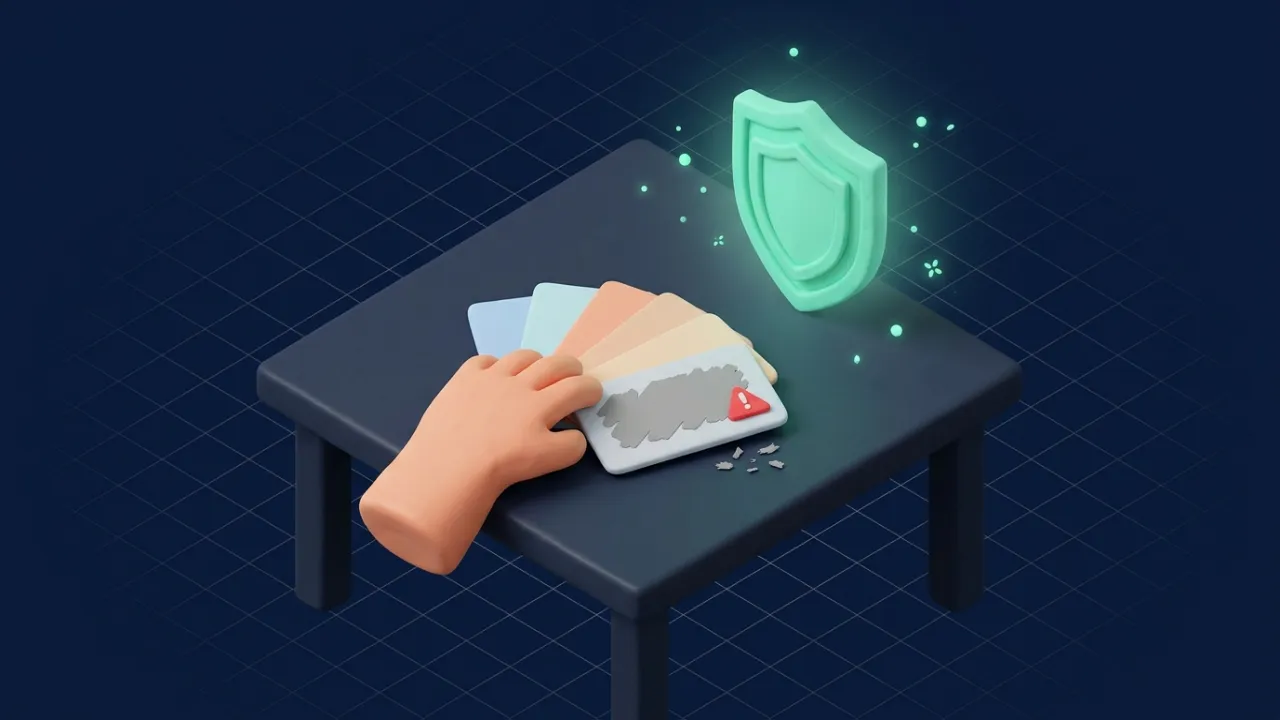
"Go to the nearest store, buy four $250 cards, scratch off the back and send me photos. Don't tell the cashier what they're for." Whoever is on the other end, a government agent, your boss, a tech support worker or someone you met online, the request alone tells you it is a scam.
Gift cards are for gifts. Anyone who asks you to pay a bill, fine, tax, fee or debt with gift cards, or to read out the numbers on the back, is a scammer. If you already sent the numbers, contact the card company immediately: unspent balances can sometimes be frozen.
Why scammers love gift cards
A gift card's number and PIN are all a criminal needs. The balance can be drained or resold online within minutes, there is no account in a real name to trace, and the payment is very hard to reverse. The FTC has repeatedly named gift cards as one of the payment methods scammers ask for most.
Who asks for gift cards
| The story | How it sounds |
|---|---|
| Government impostor | "You owe back taxes, pay today or face arrest." |
| Boss or colleague | "I'm in a meeting, can you buy gift cards for client gifts? I'll reimburse you." |
| Tech support | "Your refund went through twice, buy cards to send the extra back." |
| Utility company | "Your power will be cut off in an hour unless you pay." |
| Online partner | "I'm stuck abroad and need gift cards to get home." |
| Prize or sweepstakes | "Pay the processing fee with a gift card to claim your winnings." |
Related guides cover the full stories: tech support scams, phone scams and romance scams.
Signs you are being set up
- You are told exactly which store and which brand of card to buy.
- You are asked to stay on the phone while you shop.
- You are told to lie to the cashier if asked.
- You are asked to photograph the back of the cards or read out the codes.
- There is a threat or a deadline.
What to do in the next hour
- Stop. Do not send any more card numbers.
- Contact the card brand. Call the number on the back of the card or the brand's official website (Apple, Google Play, Amazon, Target, Steam and others have fraud contacts). Ask them to freeze the balance and explain it was a scam.
- Keep everything. The cards, receipts and any messages. You will need the card numbers.
- Tell the store where you bought them; some retailers can help with freezes.
- Report it to the FTC or your national fraud center, and warn others here.
If you were told what to do by text or email, paste the message into our scam message checker. For other payment methods used in the same scam, follow the recovery planner.
For businesses
Many companies now have a simple rule: no one buys gift cards or makes payments on the strength of an email or text alone, however senior the sender seems. A quick call to a known number stops the "boss needs gift cards" scam every time.
If they want the code on the back, they want your money.
Frequently asked questions
Why do scammers want gift cards?
Gift card balances can be spent or resold within minutes using just the card number and PIN, and they are hard to trace or reverse. That makes them almost like cash.
Can I get my money back from a gift card scam?
Sometimes, if you act fast. Contact the card brand immediately with the card numbers and receipt; if the balance has not been spent, it can sometimes be frozen. Keep the cards and receipts.
Does the IRS or government accept gift cards?
No. Government agencies do not accept gift cards as payment for taxes, fines or fees.
My boss emailed asking me to buy gift cards for clients. Is it real?
Very likely not. This is a common impersonation scam. Confirm in person or by phone using a number you already have before buying anything.
The store clerk warned me. Should I listen?
Yes. Store staff see these scams every day and are trained to spot them. Scammers often tell victims to lie to clerks, which is itself a warning sign.
I only sent photos of the cards. Is that enough for them?
Yes. The number and PIN on the back are all they need to use the balance.
Where do I report a gift card scam?
Report to the card brand, then to the FTC (reportfraud.ftc.gov) or your national fraud center, and keep the cards and receipts as evidence.
Are there legitimate reasons to buy gift cards?
Of course: as gifts. The red flag is anyone asking you to buy them to pay a debt, fee, fine or bill, or to "protect" your money.
Sources
- FTC: Avoiding and reporting gift card scams
- FTC: Gift card scam contacts for major card brands
- IRS: Tax scams and consumer alerts
Figures are the latest available from each source at the time of writing. We review guides when official data or rules change. Spotted an error? Tell us.